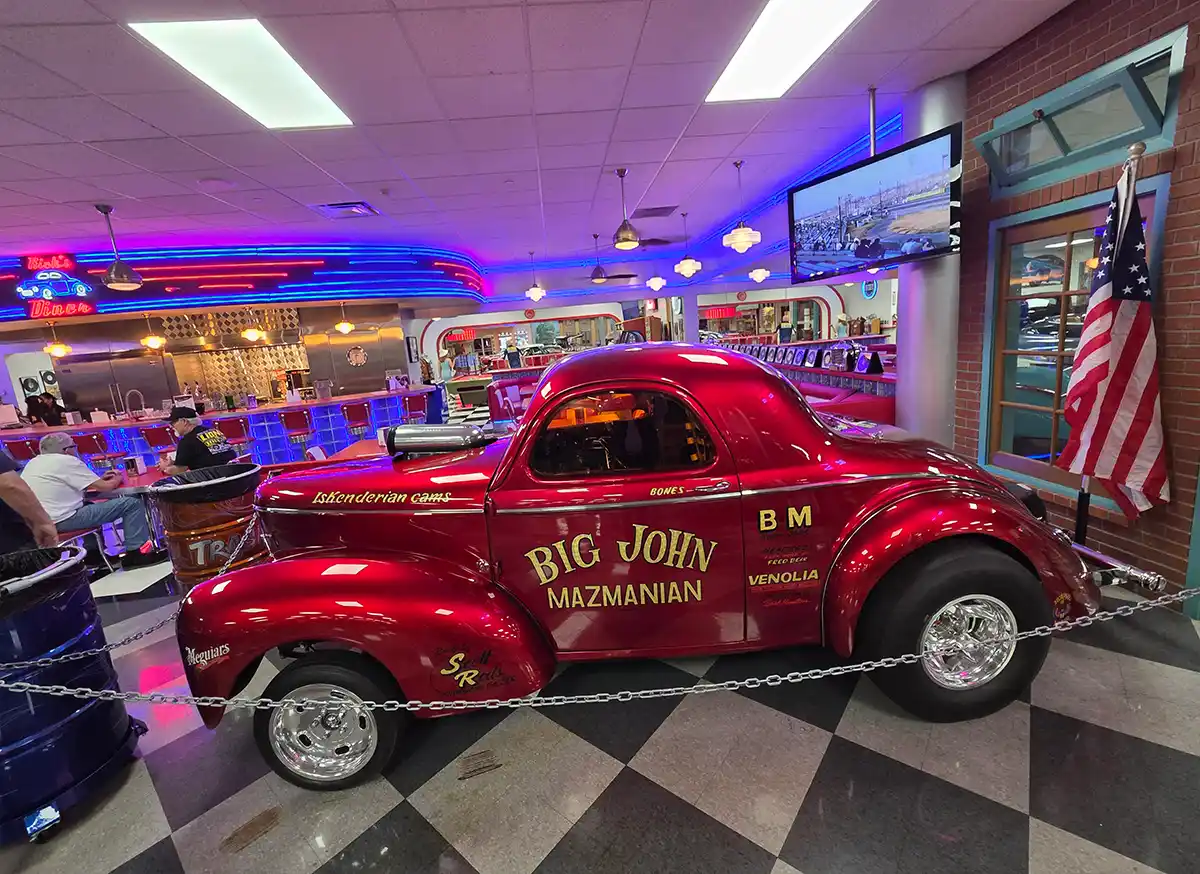
Rick Lorenzen Willys Collection
Rick Lorenzen grew up in Wilmington, California. He was especially impressed by the modified Willys cars that ran the quarter-mile local racetracks. In 1960, he purchased a 1941 coupe for $65. Rick started working on it in his friend’s backyard and at Jim Dugan’s Muffler Shop in Wilmington.


Rick’s passion for Willys never waned, and he continued to acquire different models throughout his life, never selling any of them. Ricks’ collection is the largest gathering of Willys automobiles under one roof.
Including his original 1941 Willy’s, which is in the same condition as when Rick stopped working on it in 1963.
In 1908, John Willys bought the Overland Automotive Division of the Standard Wheel Company and renamed it Willys–Overland Motor Company in 1912. From 1912 to 1918, Willys was the second-largest automobile producer in the United States, after Ford Motor Company.
The company is today mainly known for the Willys Jeep, but it also built many civilian cars.
In 1913, Willys acquired a license to build Charles Yale Knight’s sleeve-valve engine, which it used in cars bearing the Willys–Knight nameplate. In the mid-1920s, Willys also acquired the F. B. Stearns Company of Cleveland and continued production of the Stearns-Knight luxury car.

Sponsored Articles




In 1926, Willys–Overland introduced a new line of small cars named Willys–Overland Whippet. And in 1936, the Willys–Overland Motor Company was reorganized as Willys Overland Motors.
A radical concept in 1937 was the introduction of a streamlined body with a redesigned 4-cylinder engine. The body had a slanted windshield, headlamps integrally embedded into the fenders, and a one-piece, rounded hood transversely hinged at the rear. Very advanced for the time.
Rick Lorenzen Willys Collection

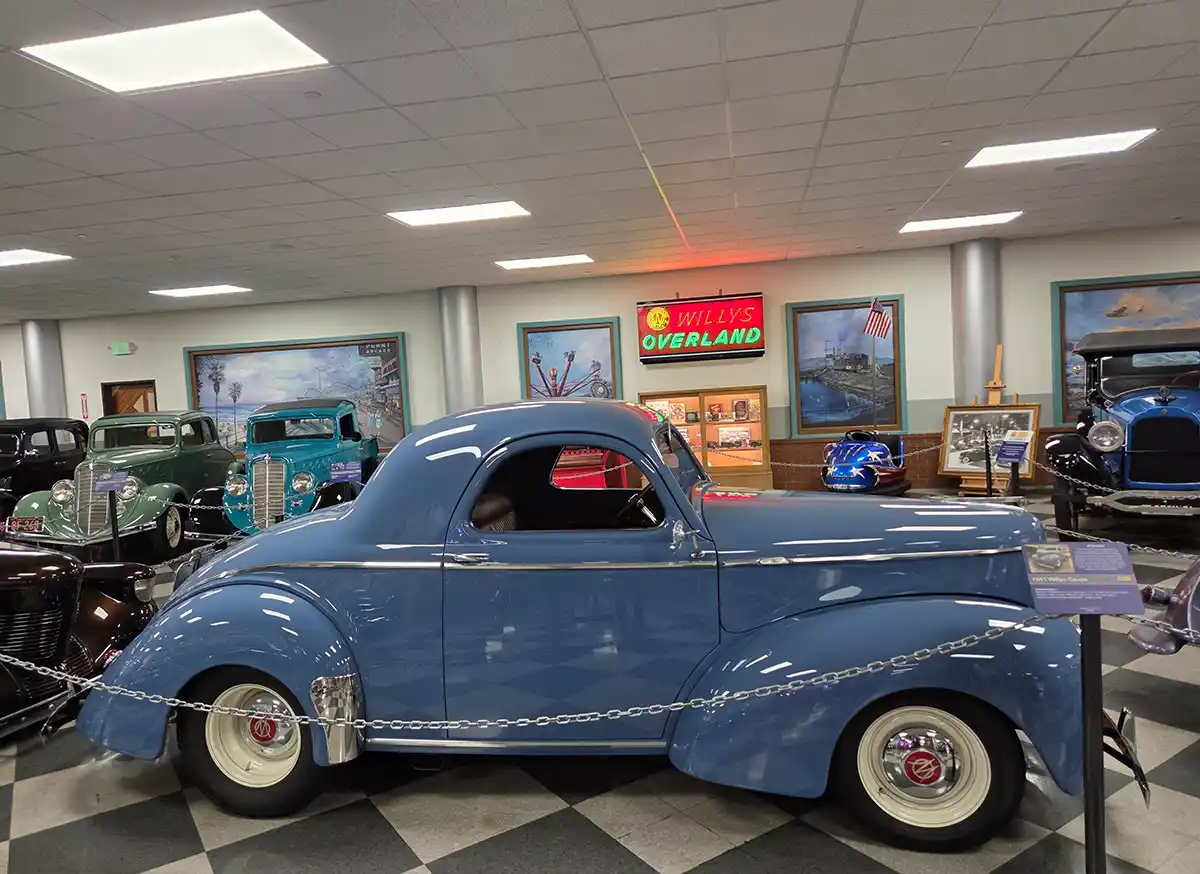


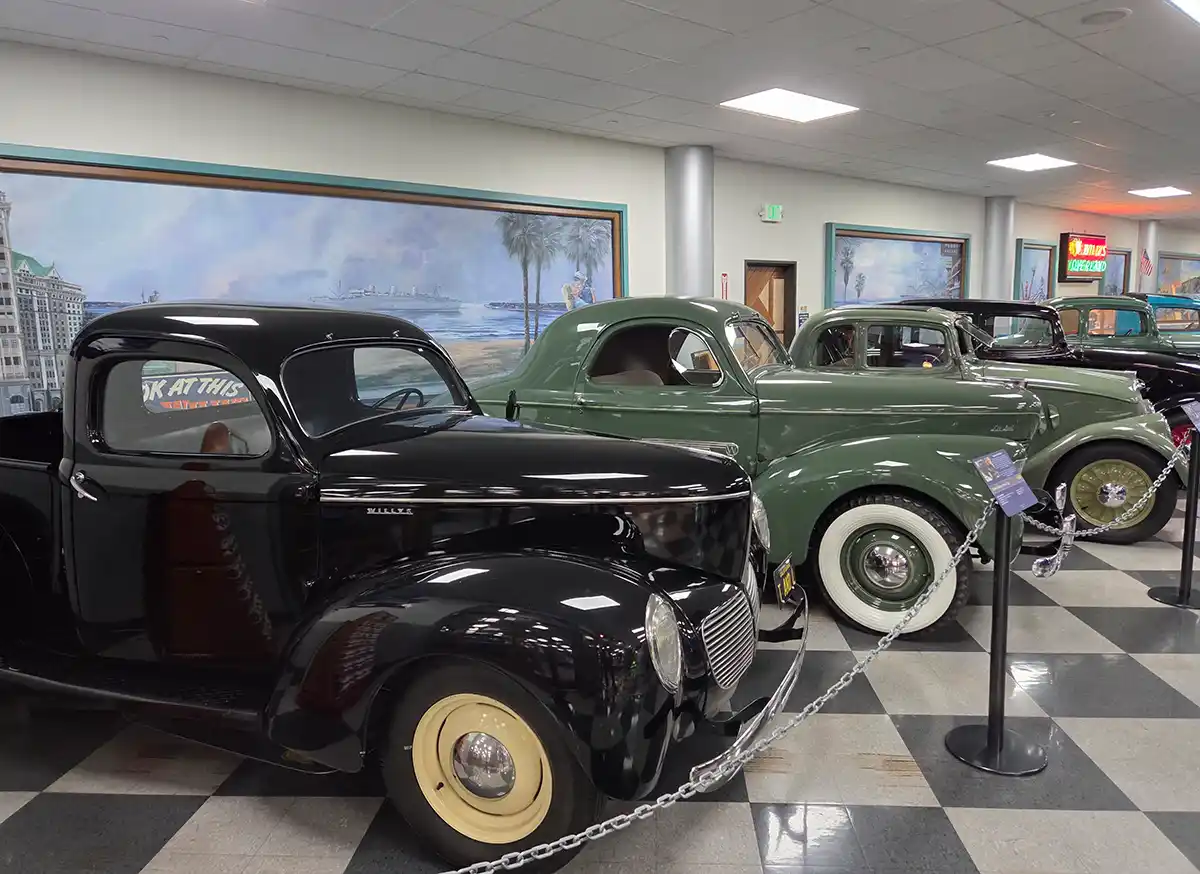

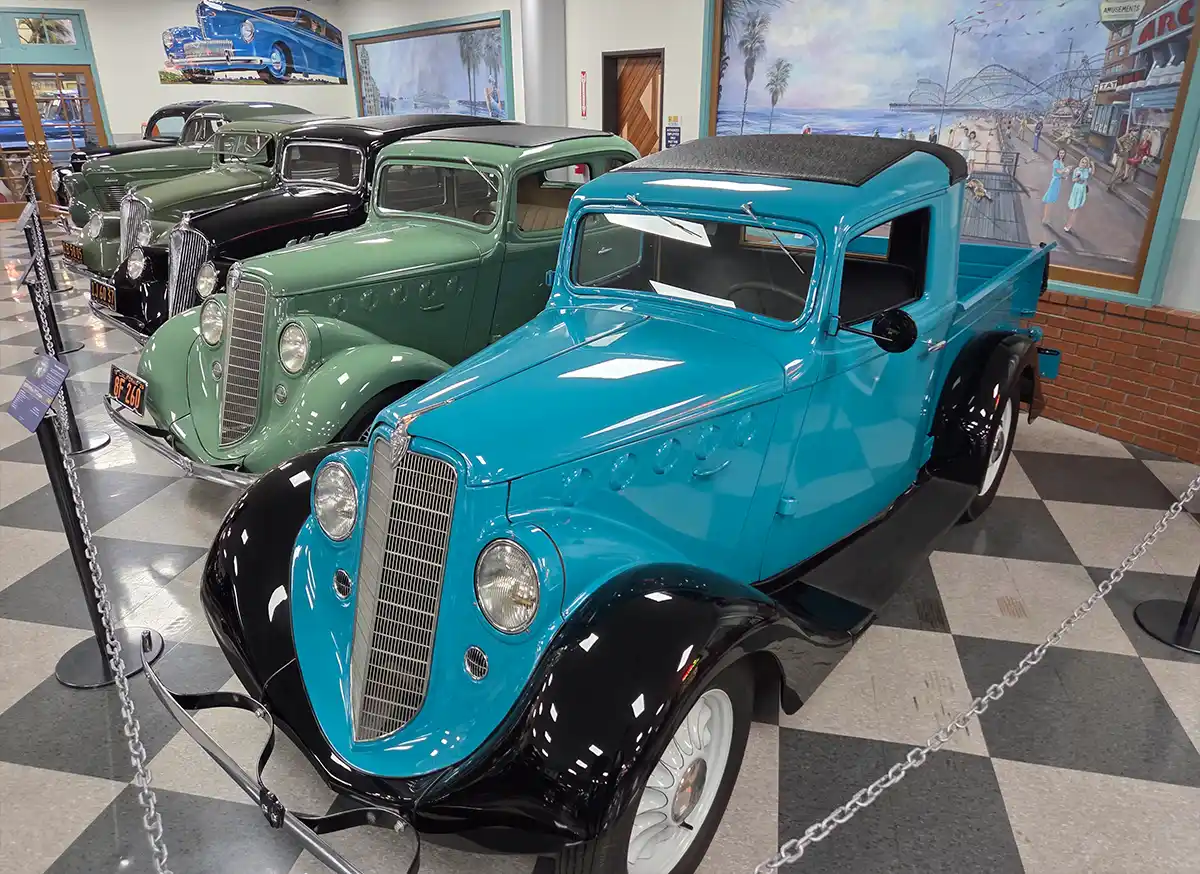
The 1939 car featured Lockheed hydraulic brakes and a four-cylinder engine that produced 61 horsepower. The Model 39 was marketed as an Overland and as a Willys–Overland rather than as a Willys.

After the war, in 1952, Willys re-entered the car market with a new compact car, the Willys Aero. Initially available only as a two-door sedan, it was offered with either an L-head or F-head six-cylinder engine. The Murray Body Corporation supplied the bodies for the Willys Aero.

In 1953, Kaiser Motors purchased Willys–Overland and changed the company’s name to Willys Motor Company. By the mid-sixties, the company had sold over 150,000 cars. But the name became history.

The cars in this collection, almost complete with every model, are something special and unique in the world. A brand that is virtually forgotten yet was essential to the American car industry.