When a Football Legend Meets the Future of Driving
Hyundai’s boldest World Cup play isn’t just about soccer it’s a statement about where the brand, and the world, is headed.
There are sponsorships, and then there are moments. Hyundai Motor Company just engineered one of the latter.
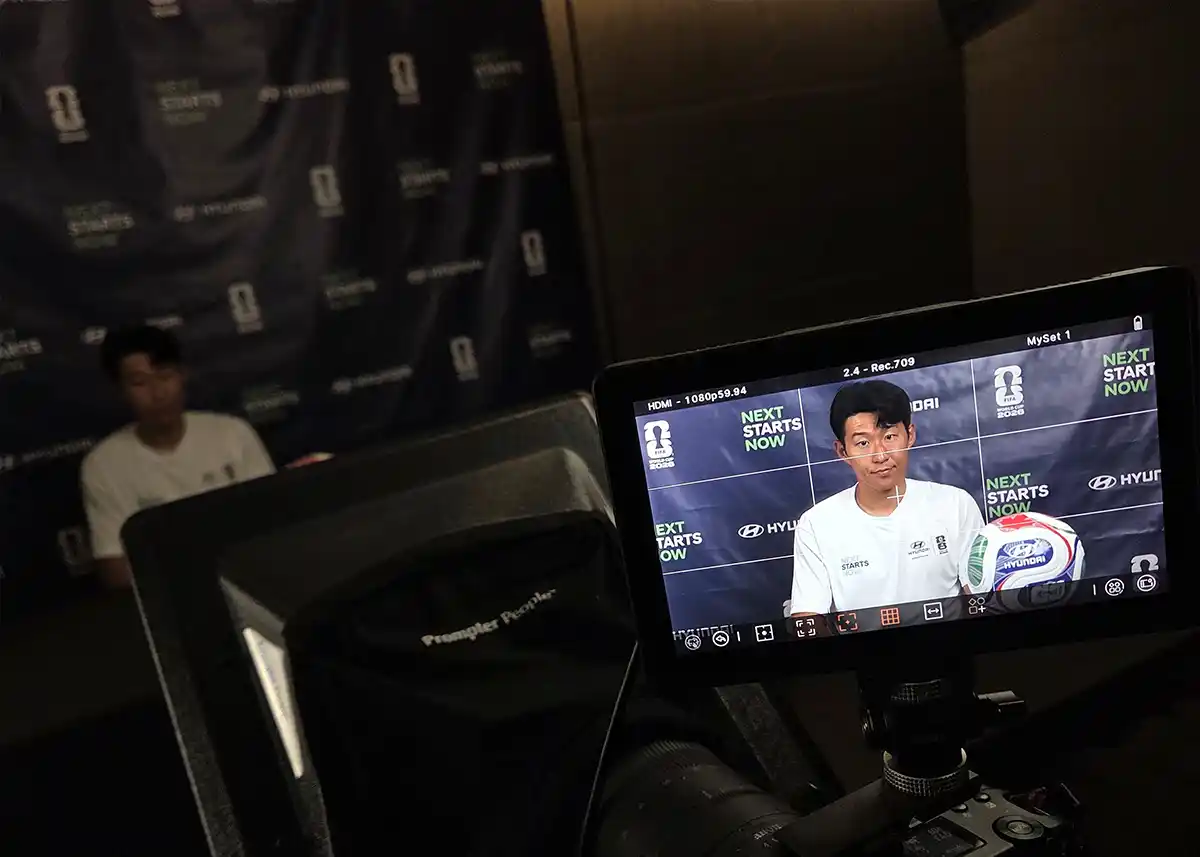
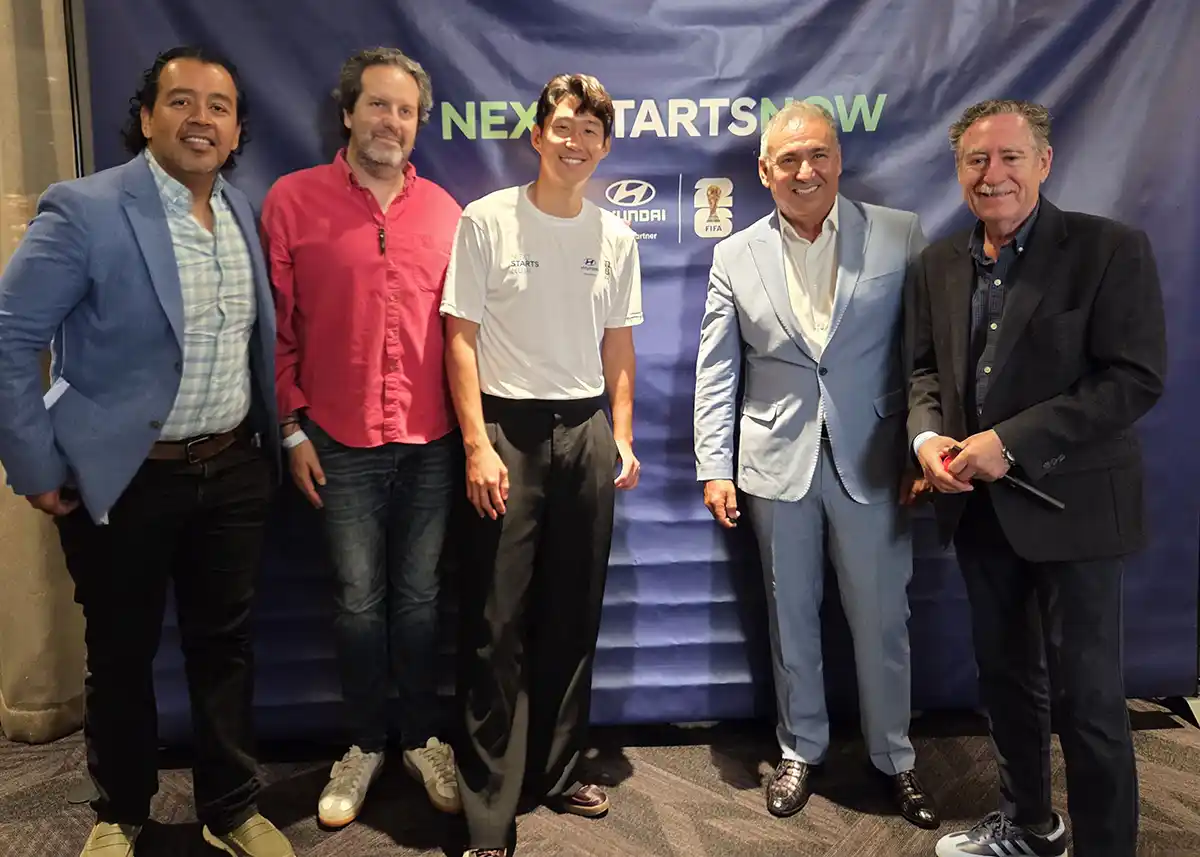
At the 2026 New York International Auto Show this past April, the Korean automaker didn’t just roll out shiny sheet metal and press releases. Instead, it unveiled something altogether more compelling: a vision. And standing at the center of it was Son Heung-min captain of the South Korean national team, forward for LAFC right here in Los Angeles, and one of the most recognized faces in global football named as Hyundai’s worldwide brand ambassador ahead of the FIFA World Cup 2026.
I sat down with Son recently, and what struck me wasn’t the star power, though there’s plenty of it. What struck me was the alignment. This is a man who speaks calmly and understands his responsibility at a national level. “Communicating with others, as in the team while playing, can be hard, but honestly always brings the best outcome,” he told me, “andkeeping the focus is the most important.” That’s not marketing copy. That’s the way he actually thinks.
And it turns out, it’s exactly the way Hyundai thinks, too.
Sponsored Articles




Twenty-Seven Years in the Making
Hyundai has been an official FIFA partner for 27 years longer than most of the players competing this summer have been alive. Starting in 1999, and supplied cars in the 2002 World Cup. That kind of institutional commitment doesn’t happen by accident. It happens when a brand understands that the number one sport in the world, at its highest level, is the ultimate global language. The FIFA World Cup 2026 will be the largest in the tournament’s history, spread across cities in the United States, Canada, and Mexico, with a 48-team format generating more matches, more moments, and more eyeballs than anything that came before it.
For Hyundai, this isn’t just another tournament cycle. It’s the launch pad for something much bigger.
The campaign is called “Next Starts Now,” and if that sounds like a tagline, look closer. It’s actually a declaration of corporate identity. Rooted in what Hyundai calls its “Progress for Humanity” vision, the campaign makes explicit what the brand has been quietly assembling for years: a future in which mobility, robotics, and human ambition are inseparable.

The Robot in the Room
Here’s where it gets genuinely fascinating and where this story goes well beyond soccer.
Hyundai owns Boston Dynamics. That’s the robotics company behind Atlas, the humanoid robot that has spent years going viral for backflips and parkour routines that make humans feel distinctly inadequate. For the World Cup, Hyundai isn’t keeping Atlas in a lab somewhere. It’s deploying Atlas along with Spot, Boston Dynamics’ four-legged robot at tournament venues to assist with operations, enhance fan experiences, and support safety and logistics throughout the competition.
Son Heung-min, one of the world’s top “human” athletes, is appearing alongside Atlas. Peak biological performance, meet peak engineered performance. The message is that these things don’t compete with each other they complement each other. They are both expressions of what’s possible when you refuse to stop at “good enough.”
José Muñoz, Hyundai’s President and CEO, said recently that the company is committed to “delivering its most ambitious collaboration yet at the largest World Cup ever.”
A Korean Brand on the World’s Biggest Stage
For those of us who have followed the automotive industry for decades, and are fans of soccer, there is a larger narrative worth appreciating here. Hyundai’s Group trajectory from budget import to luxury competitor to global technology company is one of the more remarkable brand transformations in modern manufacturing history.
Naming Son Heung-min a Korean icon competing at the highest levels of European soccer as the face of all of this is not incidental. It’s the brand autobiography, written in real time.
Closer to Home
The World Cup comes to Los Angeles, and Hyundai is already here. Youth soccer camps, led by American legends Mia Hamm and Tim Howard, are being hosted across four U.S. host cities including right here in LA for children ages 6 to 12. A global children’s drawing contest, “Be There With Hyundai,” will place winning artwork on official team buses rolling through the tournament. The activation strategy reaches from the stadium concourse all the way to elementary school classrooms.
That’s the breadth of the investment. This isn’t a logo on a banner. It’s a company embedding itself into the cultural fabric of the tournament and by extension, the city’s summer.
The FIFA World Cup arrives in Los Angeles in 2026 with more at stake than trophies. For Hyundai, it arrives as proof of concept: that a car company can be a technology company, that a Korean brand can own a global moment.