Hyundai Racing Program
Hyundai Racing Program Through Grassroots Motorsports, in the cutthroat world of automotive marketing, where manufacturers spend billions trying to convince consumers that their vehicles offer superior performance, one Korean automaker has returned to the basics of motorsports and employed an effective formula: let the racetrack do the talking.


I had the opportunity to analyze Hyundai’s partnership with Bryan Herta Autosport (BHA) in the IMSA Michelin Pilot Challenge while spending time with them during a race weekend. In the end, it was no surprise to see why this is one of the most successful motorsports programs today.

The Business Case for Grassroots Racing
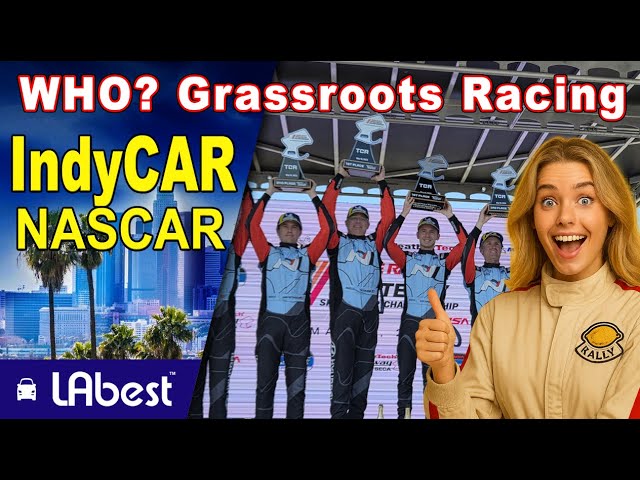
Unlike IndyCar or NASCAR, where manufacturer involvement requires massive budgets and yields limited customer interaction with the product being sold, grassroots programs offer something far more valuable: authentic brand experiences with actual customers and prospects. At the track, Hyundai owners, or soon-to-be, were welcomed into the team lounge. In this section, part of the team’s shop, people had an opportunity to meet and mingle with the drivers and mechanics and enjoy a behind-the-scenes experience at no additional cost. Seeing the work done on the cars, observing the dynamics between the race times, and even feeling the aroma of race cars excites anyone.
Stay with Los Angeles Guide
Highlighted Brand




I noticed that the interactions among the techs also tell a story of how well and how difficult it is to have 40 people working in sync, ensuring that every detail is not overlooked to achieve maximum performance.
Hyundai activations extend beyond the track, as I saw a great display at the Long Beach Grand Prix even though they were not racing there. And the official team also lends resources to competing teams that run the same cars. I saw this “help” firsthand as I worked at the pits of the Victor Gonzalez Racing Team (VGRT) during the race. The BHA/Hyundai Customer Support Team offers trackside engineering support, setup, and tuning advice to encourage more participation.


This support structure creates a virtuous cycle. Professional-level support helps racing teams achieve competitive results, which generates more media coverage and attracts additional points of contact with new customers. More customers provide greater economies of scale, which improves competitiveness, support, and ownership experience.
Hyundai goes beyond with other programs that add another dimension to customer engagement. For example, Hyundai Hope on Wheels donates $100 to local children’s hospitals for every lap led by a Hyundai race car. This initiative enables customers and fans to connect with the brand on an emotional level, extending beyond pure performance metrics.
The economic logic is compelling. Traditional advertising and social media costs continue to escalate, but at the same time, it’s more complicated than ever to measure the returns accurately. In contrast, a successful grassroots racing program provides multiple touchpoints, including media coverage during race broadcasts, social media content throughout the season, dealer activation opportunities, and, most critically, direct customer experiences that foster lasting brand loyalty. I came into the race weekend to enjoy it and ended up rooting for the Blue Elantras myself.

For Hyundai’s business objectives, this racing success has directly translated into building credibility for their “N” performance lineup – the sport-tuned vehicles that carry the company’s high-performance aspirations. New customers will purchase “N” branded cars, which also offer a better profit margin for the brand.


Competitive Analysis: Where Others Fall Short
An eye-opening experience was seeing the contrast with Hyundai’s primary competitors in TCR competition – Honda and Audi – which revealed to me the Korean manufacturer’s strategic advantages. Honda’s approach, while technically competent, highlighted the lack of comprehensive customer engagement that distinguishes Hyundai’s program. Honda Performance Development offers complete race cars, parts, and race support to grassroots motorsports racers, but their customer programs don’t align with Hyundai’s systematic approach to brand building.
Audi, despite possessing strong technical capabilities with its RS 3 LMS platform, treats TCR primarily as a customer racing exercise rather than an integrated brand-building strategy. I thought both manufacturers were missing what it takes to build lasting customer relationships, which in turn leads to higher sales.
Measuring Success: Beyond Trophies
The accurate measure of Hyundai’s grassroots racing investment isn’t just championship hardware – it’s a transformation in market perception. The Korean company started its motorsport program in the FIA WRC Rally championship and won the title. However, in the United States, rally racing is not particularly popular. And despite the world title, Hyundai faced skepticism about their performance credentials in this country. Today, young automotive enthusiasts, after winning five championships in the Michelin Cup, recognize the N brand as a legitimate high-performance alternative to established players like Honda’s Type R or Volkswagen’s GTI R lineup.
Therefore, it is no surprise that this transformation is reflected in sales data and brand perception studies. The racing program’s success provides credible third-party validation that influences purchase decisions across Hyundai’s entire lineup, not just N models. Customers considering a mainstream Elantra or Sonata see championship-winning credentials as evidence of overall engineering competence.
The lessons from the Hyundai/BHA competition program – the importance of customer engagement, comprehensive brand support, and authentic performance rights – prove that they are still a valuable proposition for gaining market share in the competitive car sales world.
I have been involved in motorsports for over 40 years, and it has become evident to me that Hyundai’s grassroots racing approach demonstrates that, in an era of increasing marketing noise, genuine performance achievements and authentic customer experiences remain the most effective ways to build lasting brand loyalty.
For other manufacturers watching their sales decline, Hyundai’s success is both an inspiration and a warning: in grassroots motorsports, half-measures yield half-results. The clear winner is the consumer, as evidenced by the smiling faces of the potential new customers in the Teams lounge.
A well-executed strategic long-term plan goes a long way to get people not to notice you but to want to be part of you. Hyundai is winning on and off the track. I am happy for them.