ACT Expo
The 15th annual Advanced Clean Transportation (ACT) Expo had a record-setting momentum and a strong optimism about the future of clean and advanced vehicle technologies.
Opening the event, Erik Neandross, president of TRC’s Clean Transportation Solutions, welcomed nearly 12,000 attendees to what has become known as the “Super Bowl of commercial vehicle shows.” In his remarks, Neandross highlighted the tremendous industry evolution, noting that ACT Expo has grown 40% year-over-year, with over 500 exhibitors and more than 200 cutting-edge clean vehicles on display twice the size of the exhibit space in Anaheim just two years ago.

Stay with Los Angeles Guide




This year’s Expo showcases zero-emission vehicles and infrastructure and reflects a broadened focus on low-carbon fuels such as renewable natural gas, propane, and biodiesel. With regulatory landscapes shifting, especially after California eased exclusive zero-tailpipe emission requirements, fleets now have expanded fuel and technology options to meet sustainability goals.
The inconsistency from the regulatory bodies has seen a shift from regulatory clarity toward a net-zero future. Now, rules are under reconsideration, subsidies and incentives are in flux, and trade policies are impacting global logistics. Regardless, the technology keeps advancing, and trucking is at a historic moment. Innovation and investment continue towards more efficient technologies across various solutions including battery electric, fuel cell, hybrid, natural gas, hydrogen, and advanced diesel engines.

Accelera by Cummins is partnering with PACCAR, Daimler Truck North America, and EVE Energy through a joint venture known as Amplify Cell Technologies to manufacture lithium iron phosphate battery cells in the U.S., strengthening domestic electrification infrastructure.
The Next Generation Honda Fuel Cell Module first appeared in North America and is set to begin production in 2027. The new module will reduce production costs by half while doubling durability and tripling volumetric power density compared to the current Honda Fuel Cell (FC) module. The prototype truck featured a stack of cells behind its cab.
Toyota also debuted its next-generation fuel cell technology in North America, the Toyota Gen 3 FC system.
“Hydrogen as a fuel – and especially fuel cells – offer benefits that can make a positive change, and we are invested in their long-term success,” Choby said. “We are investing in resources that we believe will lead to sustainable growth for our operations and the entire value chain in this still-evolving transportation sector.”

Hyundai emphasized the real-world impact of its hydrogen initiatives globally and in the U.S. The company’s HTWO brand continues to anchor its strategy, enabling partnerships, investment, and innovation across the hydrogen value chain.
A highlight of the presentation was the success of the NorCal Zero Project, the largest commercial deployment of Class 8 hydrogen fuel cell trucks in the U.S. Operating from the Port of Oakland, Hyundai’s fleet of 30 XCIENT trucks has logged nearly half a million zero-emission miles, reducing CO₂ by an estimated 25,000 tons and displacing 2.4 million gallons of diesel.
Building on this momentum, Hyundai’s HTWO Logistics operation in Savannah, Georgia, uses 21 fuel cell trucks to manage nearly 50% of logistics at the company’s new Metaplant America. This on-site hydrogen-powered ecosystem integrates hydrogen production, refueling, and clean logistics in a closed-loop system.
Globally, Hyundai has deployed nearly 3,000 hydrogen fuel cell trucks and buses across 14 countries. Its XCIENT trucks have traveled over 9 million miles in Europe since their 2020 launch.
Hyundai also unveiled its latest model: the XCIENT Fuel Cell XS, a next-generation Class 8 truck designed specifically for North America. With significant efficiency, safety, and driver comfort upgrades, the new model sets a new standard for production-ready, hydrogen-powered freight solutions.


The power of autonomy
Some have said that autonomous trucks will be the biggest invention since the diesel engine. It is the correct analogy, but the tech I viewed will fundamentally transform how trucking functions today.
“By 2030, vehicles that are not software-defined will look like steam locomotives – they’ll be obsolete.” According to Peter Ludwig, co-founder and chief technology officer of Applied Intuition, software-defined vehicles can update software after they are shipped and delivered to a customer.
More productive and efficient vehicles
Autonomous capabilities will go beyond what we have today. They will help reduce fuel consumption, provide better maintenance and capacity, lower insurance costs, and help with the shortage of personnel behind the steering wheel.
International’s Carlbaum CEO echoed that the revolution has begun. They added that the combination of available technology, regulations, and fleets that are leaning into the space are all playing their part,
“Drivers are not being taken out of the truck, for now. The first step will be automating the jobs that drivers don’t like doing. For example, long-haul routes that keep them away from home for days and sometimes weeks at a time.”


From confined areas to the highway
Catharina Modahl Nilsson, member of the executive board of Traton SE, group product management, Traton, said that the company is already selling autonomous vehicles for confined areas.
She noted that the company has a number of customers in Australia for open pit mining.
Aurora Innovation has successfully launched its commercial self-driving trucking service in Texas. Following the closure of its safety case, Aurora began regular driverless customer deliveries between Dallas and Houston this week.
The Aurora Driver has completed over 1,200 miles (1931 km) without a driver. According to a news release, it is the first company to operate a commercial self-driving service with heavy-duty trucks on public roads. Aurora plans to expand its driverless service to El Paso, Texas, and Phoenix, Arizona, by the end of 2025.
“We founded Aurora to safely, quickly, and broadly deliver the benefits of self-driving technology. We are the first company to successfully and safely operate a commercial driverless trucking service on public roads. The Aurora Driver is an SAE L4 self-driving system that is the first to be deployed in long-haul trucking.
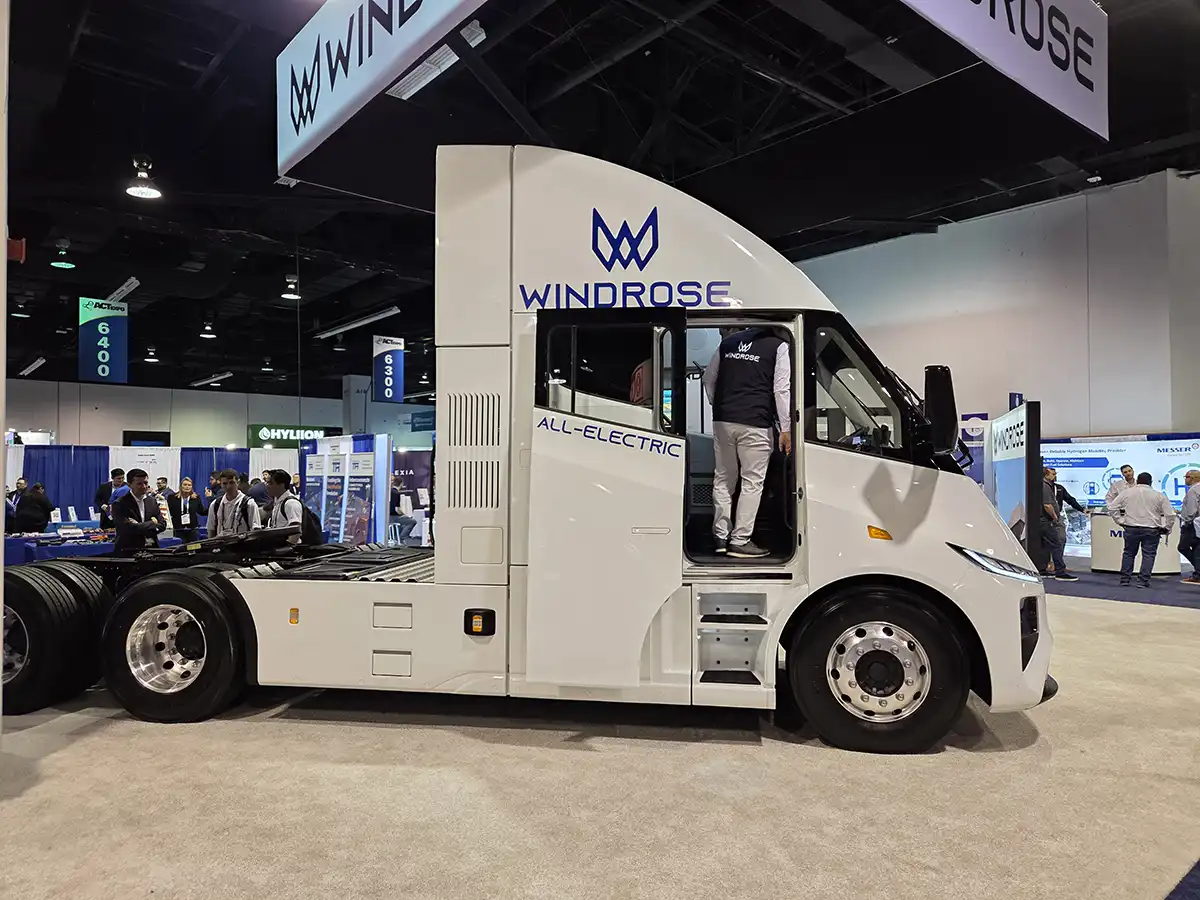
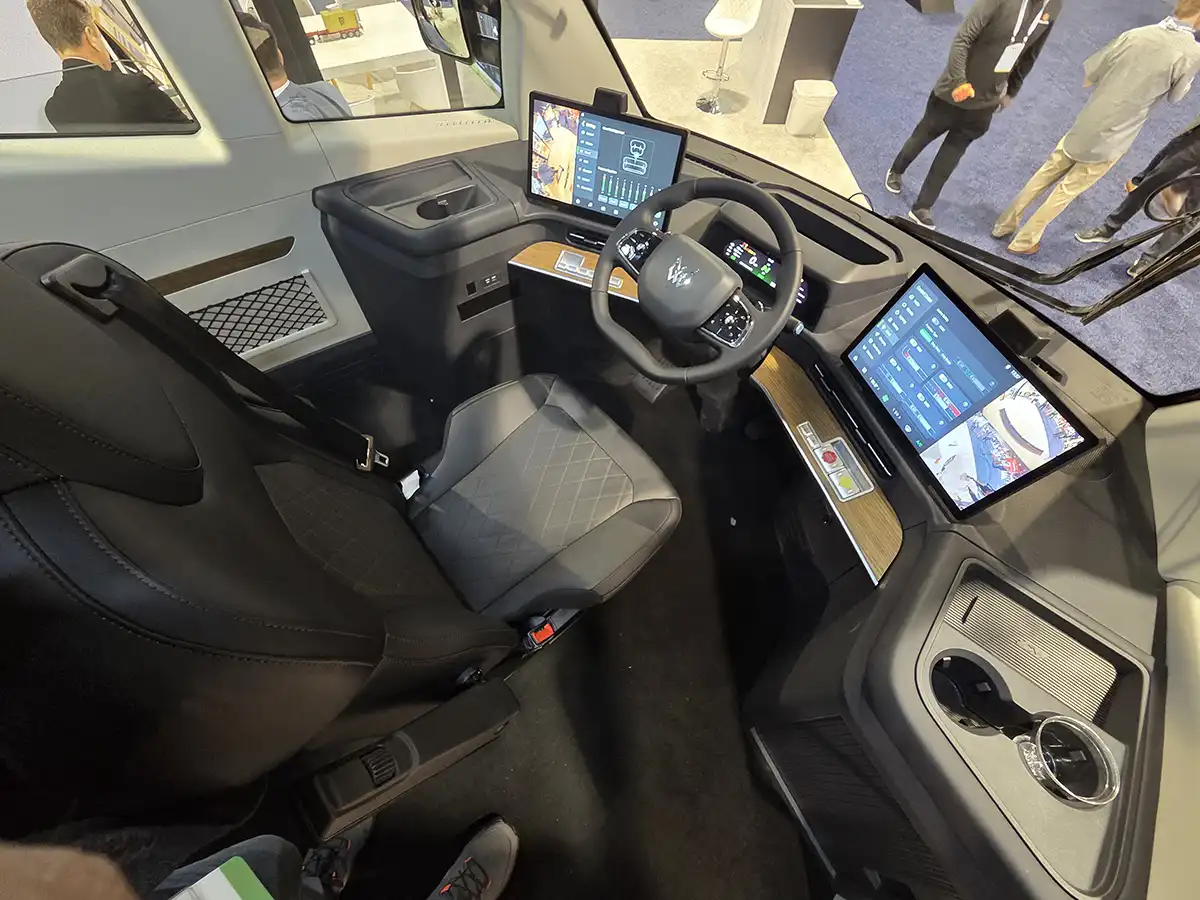
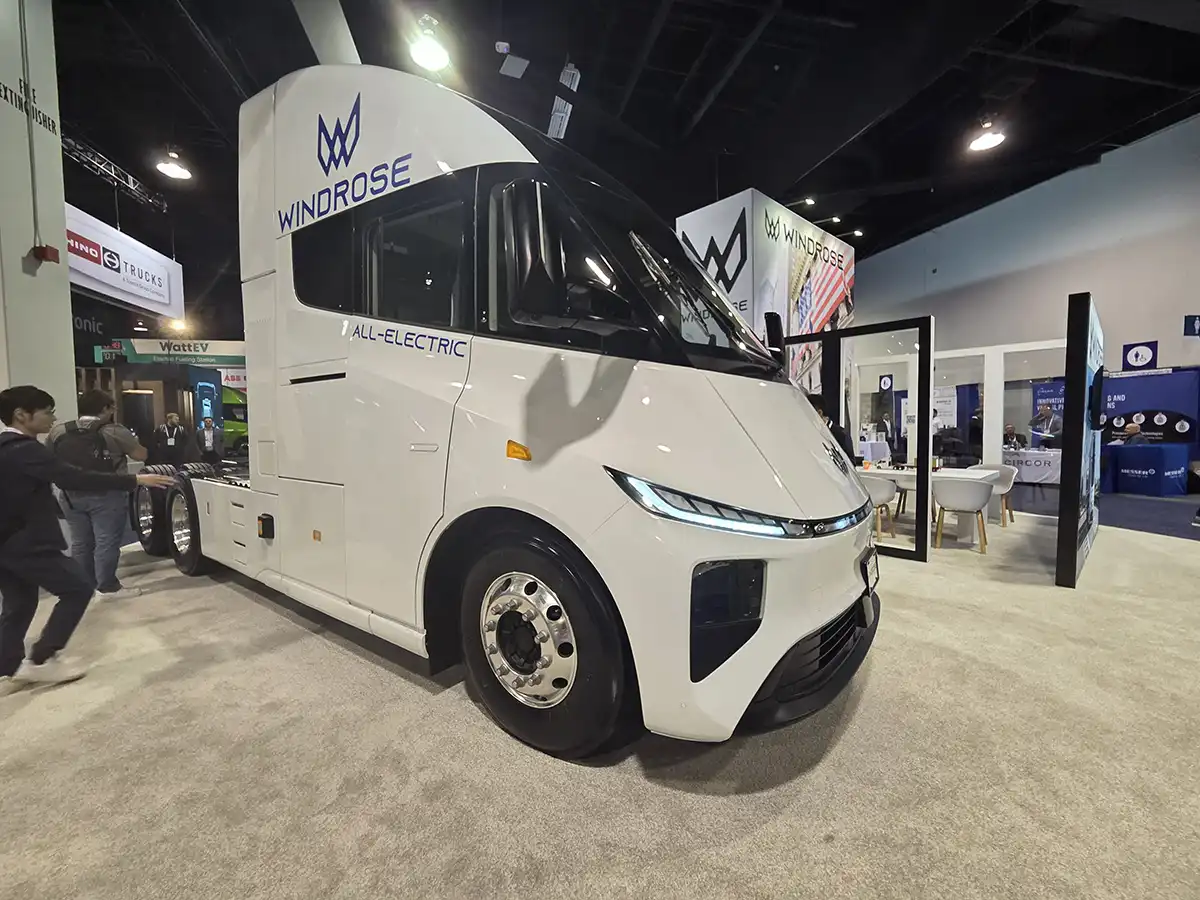
Volvo Trucks North America (VTNA) celebrated recent electric vehicle milestones at the ACT Expo
The company says its zero-emission trucks have now traveled 15 million miles (24 million km) in North America. More than 700 VNR Electric trucks are now operating in the U.S. and Canada.
Peter Voorhoeve, president of Volvo Trucks North America, said :
“Globally, Volvo Trucks is in the lead regarding market share with battery-electric trucks; that lead also includes leading here in North America.
Volvo’s strategy continues to be three-pronged: battery-electric; fuel-
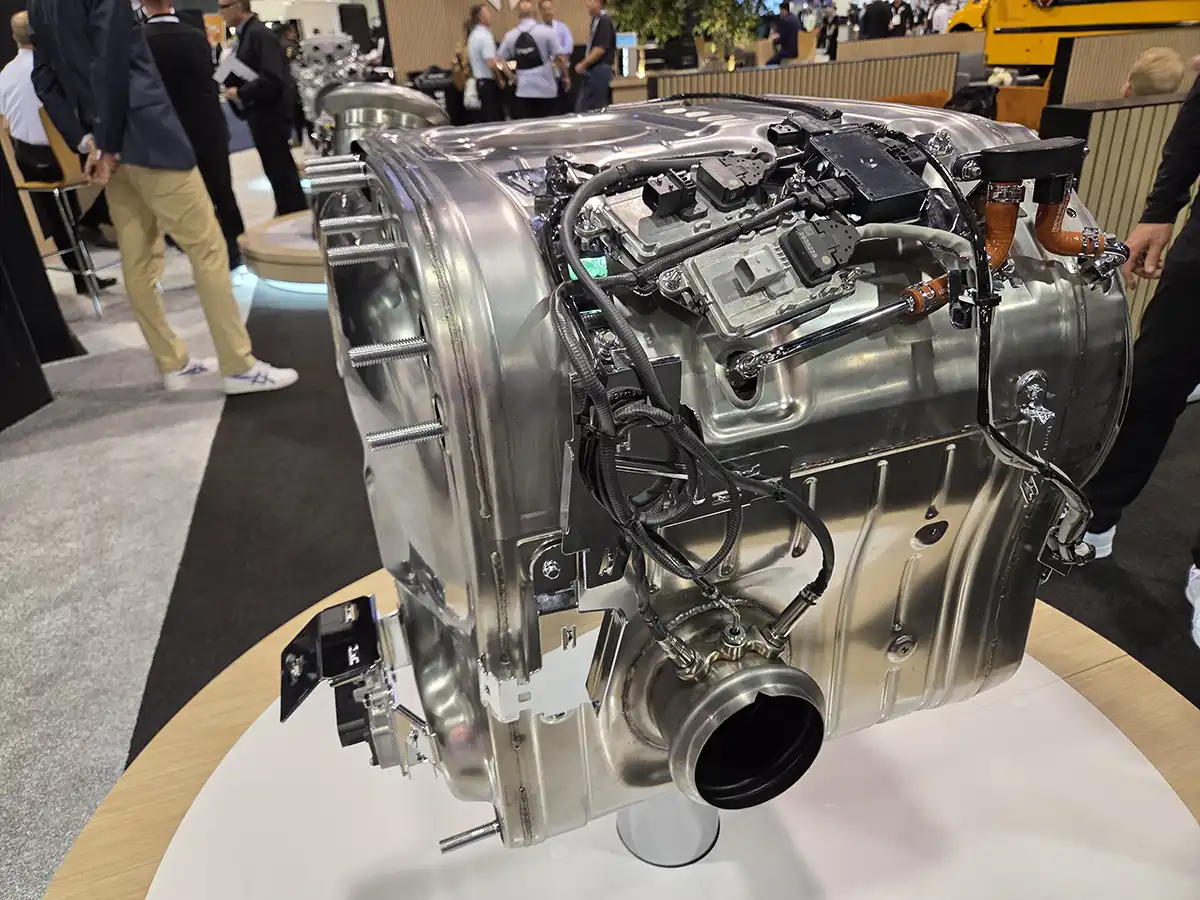
Volvo, Mack, Cummins, Navistar, and Paccar presented updated engines that are on the way to being certified for the California Air Resources Board’s (CARB) 2024 Omnibus emissions standards CARB-24 0.05g NOx rating.
Kenworth took a step toward the future of vocational trucking with the launch of the T880E, the industry’s first Class 8 battery-electric vocational truck.
Mack Trucks announced two new variants of its Mack MP13 engine designed to meet the stringent California Air Resources Board (CARB) 2024 Omnibus emissions standards and a battery-electric version of the Pioneer. The MP13 variants will power the newly launched Mack Pioneer, the company’s next-generation Class 8 on-highway truck. These engines feature a 48-volt alternator to support a heated exhaust after-treatment system, a new 10kW heater, and a supplementary battery box to meet low-NOx startup requirements. Specialized engine software further ensures compliance with CARB’s emissions limits.

The T880E features Kenworth’s fully integrated PACCAR powertrain, delivering continuous power between 365 to 470 hp and up to 605 hp peak with 1,850 lb.-ft. of torque. Designed from the ground up for electric operation, the T880E supports a customizable range of 100 to 250-plus miles depending on battery configuration, with gross vehicle weight ratings up to 82,000 pounds With DC fast charging capabilities up to 350 kW, the T880E can reach 90% charge in about two hours. Inside, drivers will find Kenworth’s latest 15-inch DriverConnect digital display, SmartWheel steering controls, and optional ADAS packages featuring DigitalVision mirrors, Bendix Fusion, and Lane Keeping Assist.
Tesla’s long-anticipated electric Semi is headed for full-scale production in 2026 and the company is backing its vision with significant investments, strong customer momentum, and a clear path to zero-emission freight, according to Dan Priestley, senior manager of the Tesla Semi program.
While other OEMs appear to be slowing or adjusting their zero-emission timelines, Priestley clarified Tesla’s position.
“We’re moving forward. Our customers understand the long-term value of electrification. The first principles haven’t changed electric trucks offer the lowest total freight ownership cost.”
Tesla’s upcoming 1.7-million-square-foot Semi factory in Nevada is already well underway, with exterior construction nearly complete and internal systems and tooling installations ongoing. Once ramped, it will support production of up to 50,000 Semi units per year, with customer deliveries beginning after the initial Tesla fleet deployment in 2026.
“We’re not just building a truck we’re building an ecosystem,” Priestley said, emphasizing that early Semi units will enter Tesla’s logistics operations. “We believe in the product and use it ourselves.”
Tesla’s pilot Semi fleet has logged nearly 8 million real-world miles, with more than two dozen trucks crossing the 100,000-mile mark. Operating across multiple duty cycles from regional LTL to food service and drayage these trucks are helping Tesla continuously improve both performance and durability.
The production Semi will offer both 300- and 500-mile variants, and thanks to the drivetrain and battery efficiency gains, Tesla has managed to reduce battery energy content while preserving range. A next-generation battery pack will power the production Semi, featuring Tesla’s most advanced cell technology. Priestley revealed the new pack has 7% better energy efficiency, enabling the same range with less total battery mass.
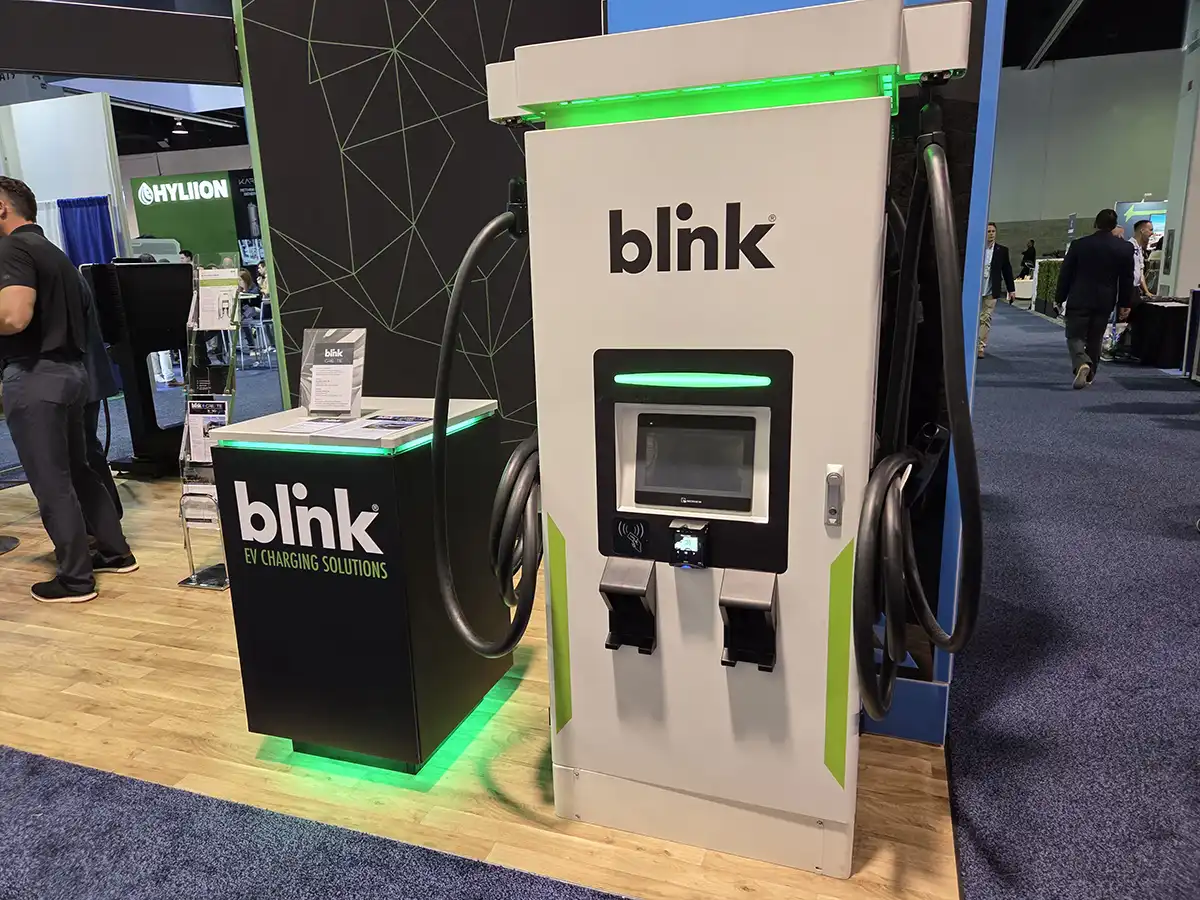
Tesla is also rolling out a 1.2-megawatt charging system, leveraging the company’s V4 Supercharger architecture to serve both passenger and commercial vehicles. Compared to earlier prototypes, this new system has a 50% smaller footprint, fewer components, and is modular, with configurations supporting both single trucks and multi-stall power sharing for fleet depots.
Tesla is building a dedicated public charging network for the Semi, with 46 sites already underway across major freight corridors and industrial zones. These stations will begin opening later this year and expand significantly in 2026.
Harbinger has introduced a first-of-its-kind plug-in hybrid for medium-duty vehicles, expanding its American-made EV lineup to support longer-range fleet operations. The series hybrid delivers up to 500 miles of range by combining an electric drivetrain with a gasoline-powered range extender. The platform features a 1.4L gasoline engine, 800V generator, and 50-gallon tank that recharges a 140 or 175 kWh battery, powering up to 440 horsepower and 1,140 lb-ft of torque. DC fast charging enables 80% battery capacity in under an hour.
The ACT Expo was a great display of technology. Still, as I talked to several trucking companies, their observation is that the mathematics of trucking does not work without incentives and subsidies. Switching to zero-emissions could double the freight cost even when applying some of these federal or State funds.